After our daughter was born, we recorded feeds and nappies on our phones. We also had a whiteboard on the wall, which we meant to update as we went. In practice, we often forgot.
When the midwife asked when our baby had fed, how much she had drunk from a bottle and how many wet nappies there had been, we had to look up some answers and reconstruct others together. That was where Pola began.
We wanted one place for the records
Paper or a whiteboard can work well when entries are kept up to date. Our records were spread between the phone, board and conversations. We wanted one journal that was quick to update and easy to check.
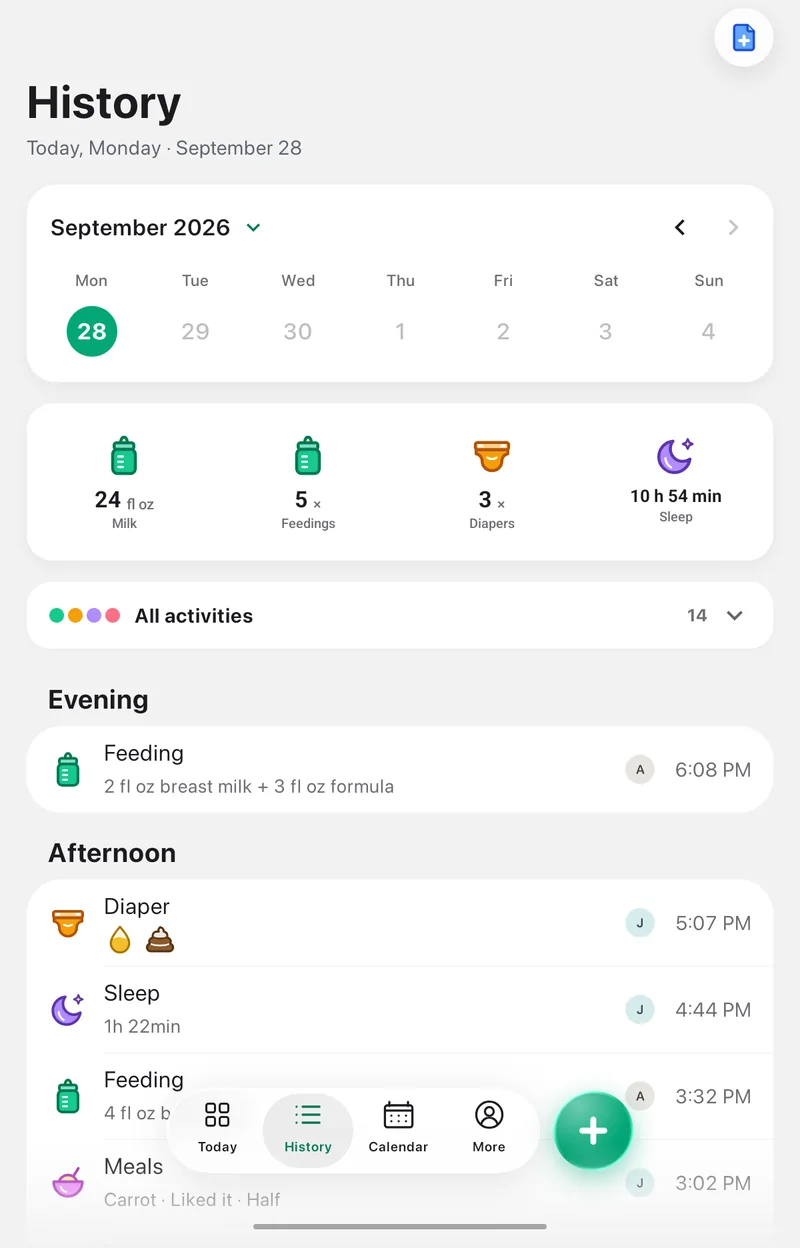
I focused on adding an event without going through many screens and finding it later in the day's history. Over time, the journal grew to include feeds, sleep, nappies, measurements and other observations.
When another person takes over
Pola Plus lets another caregiver join the journal with their own permissions. Entries show who added them, and changes reach other devices after syncing.
The app does not fill in the journal for us. We still need to add entries. When designing changes, I keep returning to how quickly a record can be added and found.
A summary for an appointment
The PDF report brings existing records together before a consultation. Choose the days and sections, then Pola Plus prepares a file to show or print.
The data comes from caregivers. Health assessment and recommendations remain with the doctor or midwife. This is our experience in Poland; care arrangements elsewhere can differ.
The work behind the app
Pola has two native apps, a backend, a website and five languages. I wrote more about design, development and working with AI agents in the case study on cielebak.com.
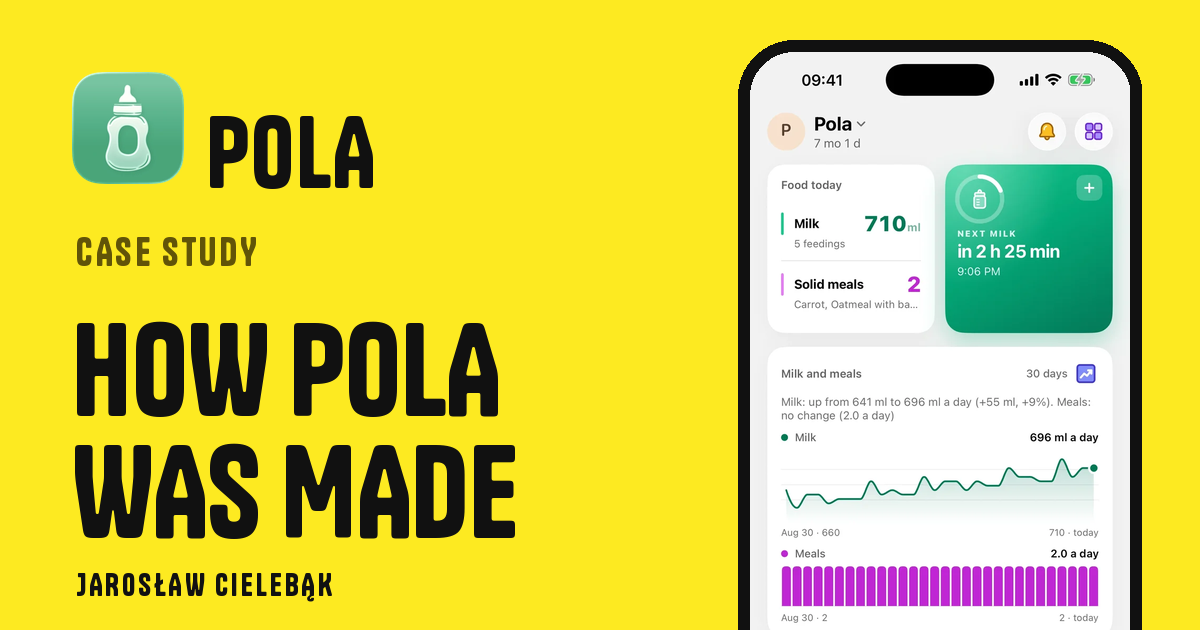
To explore the journal, see Pola's features and download the app.